If you’ve been following the Nintendo Switch emulation scene, you’ve probably heard about Skyline Emulator. Once considered one of the most promising Android-based Switch emulators, Skyline gained a loyal following for its performance and accessibility.
But lately, many users have been asking the same question: Is Skyline Emulator still supported? With rapid changes in emulation development and legal landscapes, it’s easy to lose track of what’s active and what’s not. In this article, we’ll break down the current status of Skyline, why development changed, and what alternatives you should consider today.
What Is Skyline Emulator?
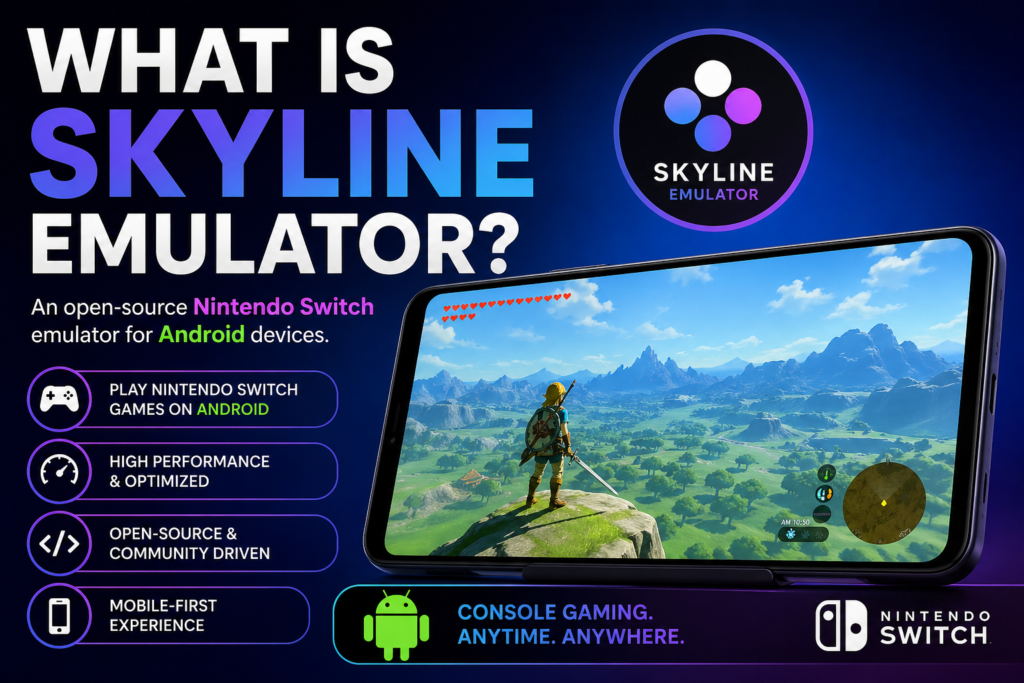
Skyline Emulator was an open-source Nintendo Switch emulator designed specifically for Android devices. Unlike many other emulators that focus on PC platforms, Skyline stood out because it brought Switch gaming to smartphones—something many users had been waiting for.
It gained popularity due to:
- Fast performance on high-end Android devices
- A user-friendly interface
- Frequent updates during its active development phase
- Strong community support
Skyline wasn’t perfect—it had compatibility limitations—but it showed serious potential.
Is Skyline Emulator Still Supported?
Short Answer: No, Skyline Emulator is no longer actively supported.
Development of Skyline Emulator officially stopped in 2023. The core developers announced that they would no longer continue working on the project,
Meaning:
- No new updates
- No bug fixes
- No official support
The GitHub repository remains available for reference, but it is essentially archived.
Why Did Skyline Emulator Development Stop?
The end of Skyline wasn’t due to lack of interest or technical failure—it was largely influenced by legal pressure and broader industry events.
Key Reasons:
1. Legal Concerns Around Emulation
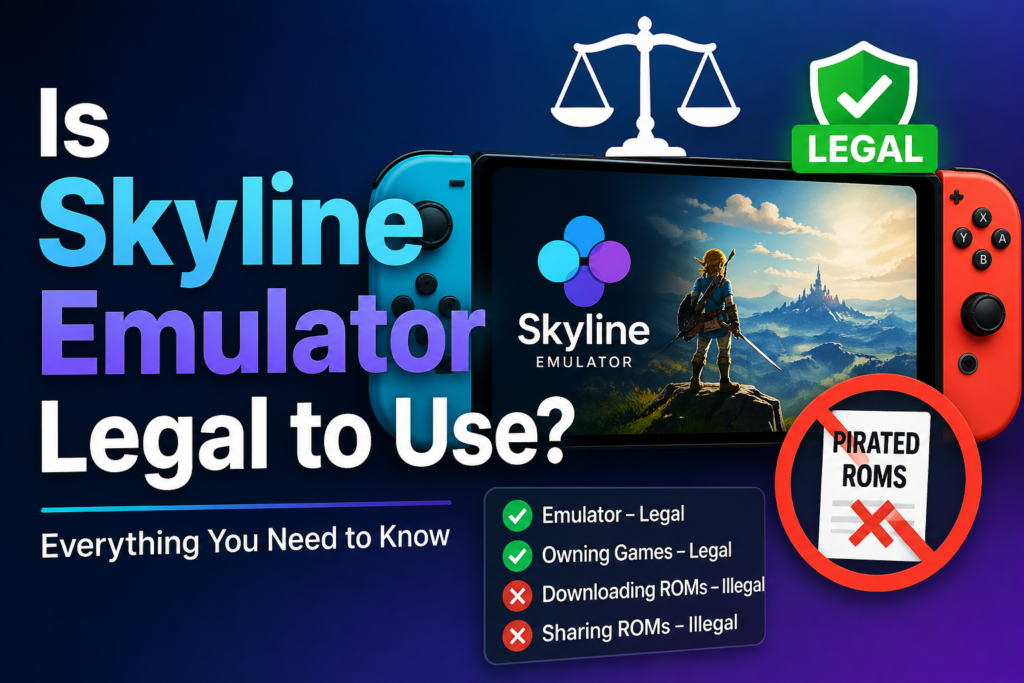
While emulators themselves are legal in many regions, they often exist in a gray area—especially when tied to proprietary systems like the Nintendo Switch. Increased scrutiny made continued development risky.
2. Industry Crackdowns
Major gaming companies have been more aggressive in protecting their intellectual property. This created an environment where emulator developers had to be cautious.
3. Developer Decisions
The Skyline team chose to step away voluntarily rather than risk potential legal complications. This is a common pattern in emulator development history.
What Happens to Skyline Now?
Even though Skyline is discontinued, it hasn’t completely disappeared.
Current Status:
- The code is still available (open-source)
- Existing builds can still run on devices
- No official updates or fixes
However, using Skyline today comes with limitations:
- Compatibility issues with newer games
- Bugs that will never be fixed
- Performance stagnation compared to newer emulators
Is Skyline Still Worth Using in 2026?
The honest answer: Not really.
While Skyline can still run some games, it’s no longer competitive with newer emulators.
Pros (Still Relevant):
- Lightweight
- Easy to install
- Works offline
- Good for older supported titles
Cons (Major Issues):
- No updates or improvements
- Limited game compatibility
- Potential crashes and bugs
- No support for newer Android versions optimizations
If you’re serious about Switch emulation, Skyline is now more of a legacy project than a practical choice.
Best Alternatives to Skyline Emulator
Since Skyline is no longer supported, users have shifted to newer options.
1. Yuzu (Android & PC)
Yuzu has become one of the leading Nintendo Switch emulators.
Why it’s popular:
- Active development (though status can vary regionally)
- Better compatibility
- Regular updates
- Larger user community
2. Ryujinx (PC)
Another strong competitor in the emulation space.
Key features:
- High accuracy
- Stable performance on PC
- Strong compatibility with many titles
3. Strato (Skyline Successor Project)
Some former Skyline developers and community members have contributed to newer experimental projects like Strato.
Note: These projects are still evolving and may not be fully stable.
Skyline Emulator vs Modern Alternatives
| Feature | Skyline Emulator | Modern Emulators |
|---|---|---|
| Development Status | Discontinued | Active |
| Game Compatibility | Limited | Expanding |
| Performance | Good (old) | Better (new) |
| Updates | None | Frequent |
| Community Support | Declining | Strong |
This comparison makes one thing clear: Skyline has been left behind.
Can Skyline Come Back?
Technically, yes—but realistically, it’s unlikely.
Because Skyline is open-source, anyone could:
- Fork the project
- Restart development
- Build upon its foundation
However, challenges remain:
- Legal risks
- Complexity of Switch emulation
- Availability of skilled developers
So far, no major revival has gained traction.
What Should You Do Instead?
If you’re looking to emulate Nintendo Switch games today,
Here’s what you should do:
1. Switch to a Supported Emulator
Choose actively maintained projects for better performance and security.
2. Keep Your Expectations Realistic
Switch emulation is still demanding, especially on mobile devices.
3. Use Compatible Hardware
High-end devices significantly improve performance.
4. Stay Updated
The emulation scene changes quickly—what’s outdated today might evolve tomorrow.
Conclusion
Skyline Emulator had a promising run and played a significant role in bringing Nintendo Switch emulation to Android devices. However, due to legal concerns and developer decisions, it is no longer supported. While it still works for some older titles, it has been surpassed by newer, actively developed emulators.
The emulation landscape continues to evolve, and Skyline’s legacy lives on through newer projects inspired by its innovation. If you’re serious about emulation in 2026, it’s time to move forward—not backward.